Advocacy is one of the primary benefits provided to the members of North Dakota United. With more than 11,000 total members, representing working professionals in public education and services, retired workers, aspiring educators and community allies, we are capable of making a lot of noise in the political arena and public discourse on our state’s direction for the future.
In 2025, that potential was fully on display throughout the entire year — but was especially noticeable during the opening months while the 69th North Dakota Legislative Assembly was taking place. We went into the session with a game plan, knowing full well that attacks were coming, as well as opportunities for positive, productive changes to state and local policies that matter most to our members and the students, families and communities they serve.
Here is a brief rundown of the biggest wins our members were able to achieve by working together during the legislative session, and some impressive stats on how we were able to affect these outcomes:
Voucher Schemes Defeated — Again & Again
In many ways, 2025 felt like the Year of the Educational Voucher at the North Dakota Legislature. Lawmakers introduced not one, not two, but SIX voucher bills that would send public dollars to private schools. Add to that a new governor with an open mind for vouchers against the backdrop of a nation filled with states embracing voucher schemes, and for many in the world of North Dakota educational policy, the beginning of the 2025 legislative session felt like the proverbial final hurdle for voucher supporters.
Publicly funded private schools felt almost inevitable — not a matter of if the Legislature would pass a voucher bill but when. And yet, in December 2025 — at the end of the supposed Year of the Educational Voucher — North Dakota’s public dollars are still not being siphoned off to fund private education.
This is the story of how all of us — the members of North Dakota United — and others who care deeply about public education defeated vouchers in North Dakota’s 69th Legislative Assembly.
Vouchers are unpopular in our state, and it makes sense why they would be. Intuitively, most of us understand it doesn’t make sense to divert funding from the public schools that serve more than 90 percent of North Dakota’s students to private schools.
Many of us are familiar with anecdotes from states that have passed universal vouchers, where voucher recipients have used public dollars to pay for big-screen TVs, or kayaks, or horseback riding lessons. Or that voucher programs have ballooned to overwhelm a state’s education budget (as in Arizona), hurting students at public schools. Or that the vast majority of students who attend private schools in states with voucher programs never attended a public school in the first place. Or that private schools in states with voucher programs tend to increase their budget by almost exactly the amount as the educational voucher offered by public dollars.
And most of us understand that public schools are the bedrock of many rural towns — when the school closes, the town dies. And we love our small towns in North Dakota. So, it’s no surprise vouchers are unpopular.
For these reasons and many others, voucher proponents no longer refer to them as “vouchers.” Instead, they use focus group-approved terms, like “school choice,” and refer to vouchers as “education savings accounts” or “ESAs.” But North Dakotans know that any program that sends public dollars to private schools is an educational voucher. “A rose by any other name,” and so forth. And for many reasons – including all of those listed above – we know vouchers are bad for public education.
Instead of embracing one of the six voucher “solutions” proposed by lawmakers, thousands of North Dakotans (including, and especially ND United members) stood up for their public schools. Several voucher bills failed in committee, all but dooming their chances on the floor. But HB 1540 (introduced by Rep. Ben Koppelman, R-West Fargo) and SB 2400 (introduced by Sen. Michelle Axtman, R-Bismarck) were both passed out of their chambers of origin.
HB 1540 was narrowly approved by both chambers but vetoed by Gov. Kelly Armstrong, who said he believed it would have been folly to do so, as the bill would easily have been overturned by a referral campaign. He had a good reason for that suspicion — in the span of just a few days after it passed the Senate, he received notes, messages and phone calls from thousands of constituents — many of them NDU members — asking him to veto the bill.
Instead, Armstrong promoted SB 2400, which he felt would be more palatable to the general public (SB 2400 included lesser payments for students in public education, as well as private education, which could be spent on educational expenses. Privately educated students would have received significantly more money).
SB 2400 was defeated in the House of Representatives by a vote of 14 to 78 for a wide variety of reasons. Pro-public education politicians voted against it for obvious reasons; lawmakers with libertarian tendencies voted against it because constituents who elect to homeschool their children said it was the first step toward what they called unfair regulations dictating how they could educate their children. And even voucher advocates voted against it because it included funding for public school families — money that they believed should have been reserved solely for private school families.
So, as of December 2025, there are no private school vouchers on the books. Ultimately, 2025 was not the Year of the Educational Voucher, but the year the educational voucher was defeated – again and again. It was the year thousands of North Dakotans stood up for the beating hearts of their communities — their public schools. It was the year that NDU members demonstrated that they will always stand up to lead the fight against private school vouchers, again and again, if we must.
Defeated SB 2307 — Library Censorship Bill
SB 2307 was this session's iteration of a book ban, introduced by Sen. Keith Boehm. It would have criminalized librarians, required books considered “obscene” or “explicit” be placed in a location inaccessible to minors, and allowed any person from any state to challenge books in our libraries. After passing through the House and Senate, Gov. Kelly Armstrong vetoed the bill. SB 2307 was then returned to the Senate, where the veto was sustained.
Weakened HB 1437 — Anti-Tenure Bill
HB 1437, which started as a ban on tenure at two-year institutions of higher education, was amended to alter tenure and post-tenure review and signed by Governor Armstrong. The Governor took action in response to the over 100 emails sent to his office by NDU members and supporters. SB 2003, the higher ed funding bill, was amended to strike out language in HB 1437 prescribing the makeup of a "culminating post-tenure evaluation committee" and add due-process protections to post-tenure evaluation. In the final version of SB 2003, the culminating committee language was added back in, while due-process protections remained.
Passed HB 1238 — Lifetime Teaching Licensure Bill
During the 2023 session, members in Fargo worked to introduce a bill that would have lowered the years required for a lifetime teacher licensure from 30 to 20. Although that bill was defeated, there was another chance this year as Rep. Zachary Ista introduced the same bill that was defeated previously. Originally, HB 1238 also lowered the requirement to 20 years, but after some debate and amendments in the committee process, the bill passed with a 25-year requirement, and Governor Armstrong signed it into law.
Passed HB 1530 — Special Education Study Bill
A bill that came about because of the work of our members, HB 1530 provides for a legislative management study on the circumstances and needs of special education teachers and the related special education teacher shortage. It was passed and signed by the Governor without significant opposition. ND United members in the Special Ed Collective worked tirelessly to address this important issue and get this bill passed.
Making Our Voices Heard
Actions Taken: 4,788
We had 4,788 people take action after receiving an Action Alert during the 2025 North Dakota legislative session.
- 1,652 ND United members
- 3,136 community supporters and allies of public education and public service
Emails Sent: 28,000+
NDU members continued to advocate through emails to their legislators as bills moved through the legislative process. Many also shared our Action Alert links with their networks through social media and other channels. Because of this, we had over 28,000 emails sent through our system. While this number is impressive, we know there were additional emails sent directly that aren't included in this count, so the real number is likely higher.
Testimonies Submitted: 347
Our members made a huge impact through submitting 347 online testimonies in support of or opposition to bills when they were in their respective policy committees. Because of the limited time allowed for submitting testimony, this was an especially impressive feat.
Lobby Day Attendees: 50+
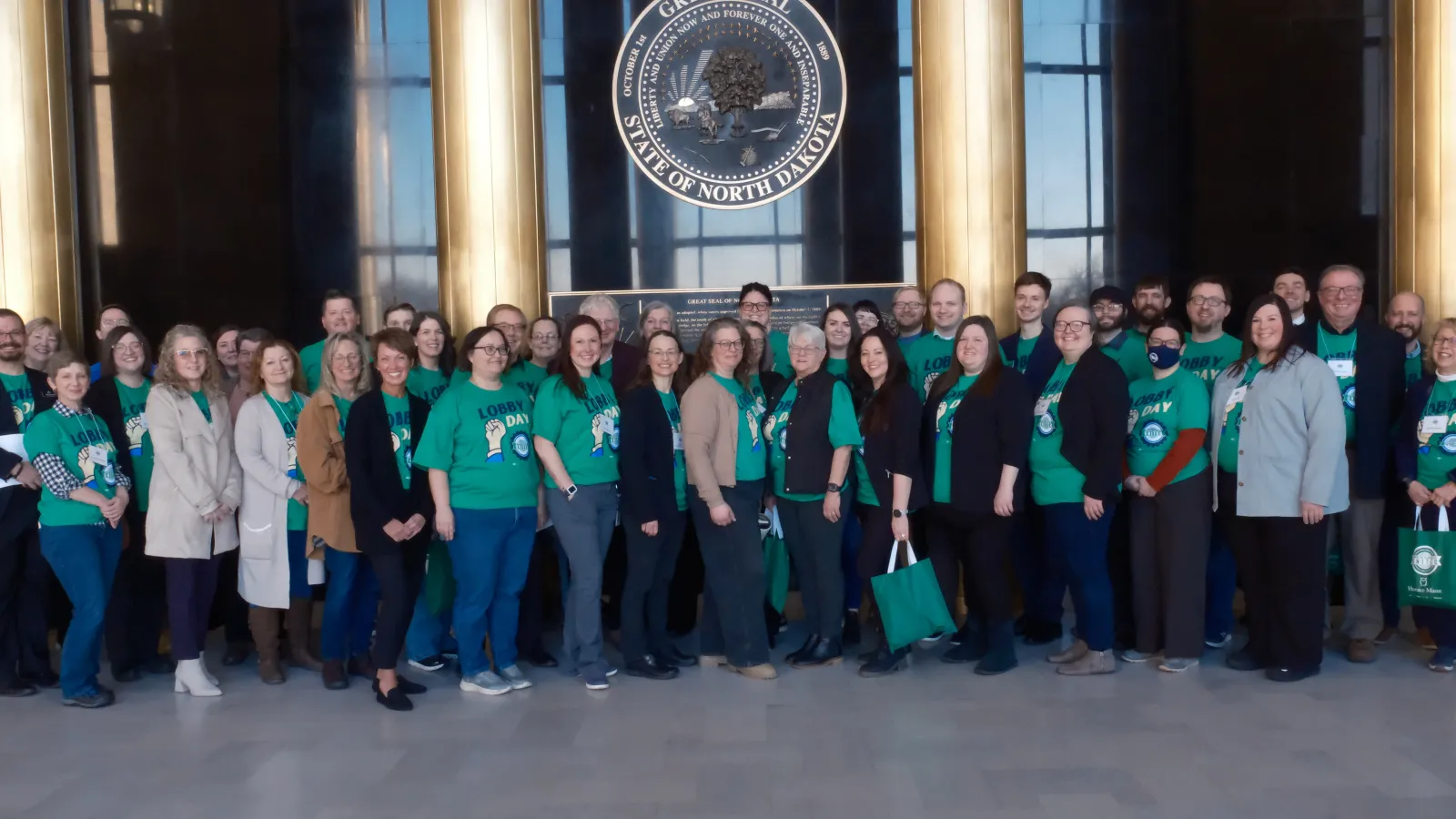
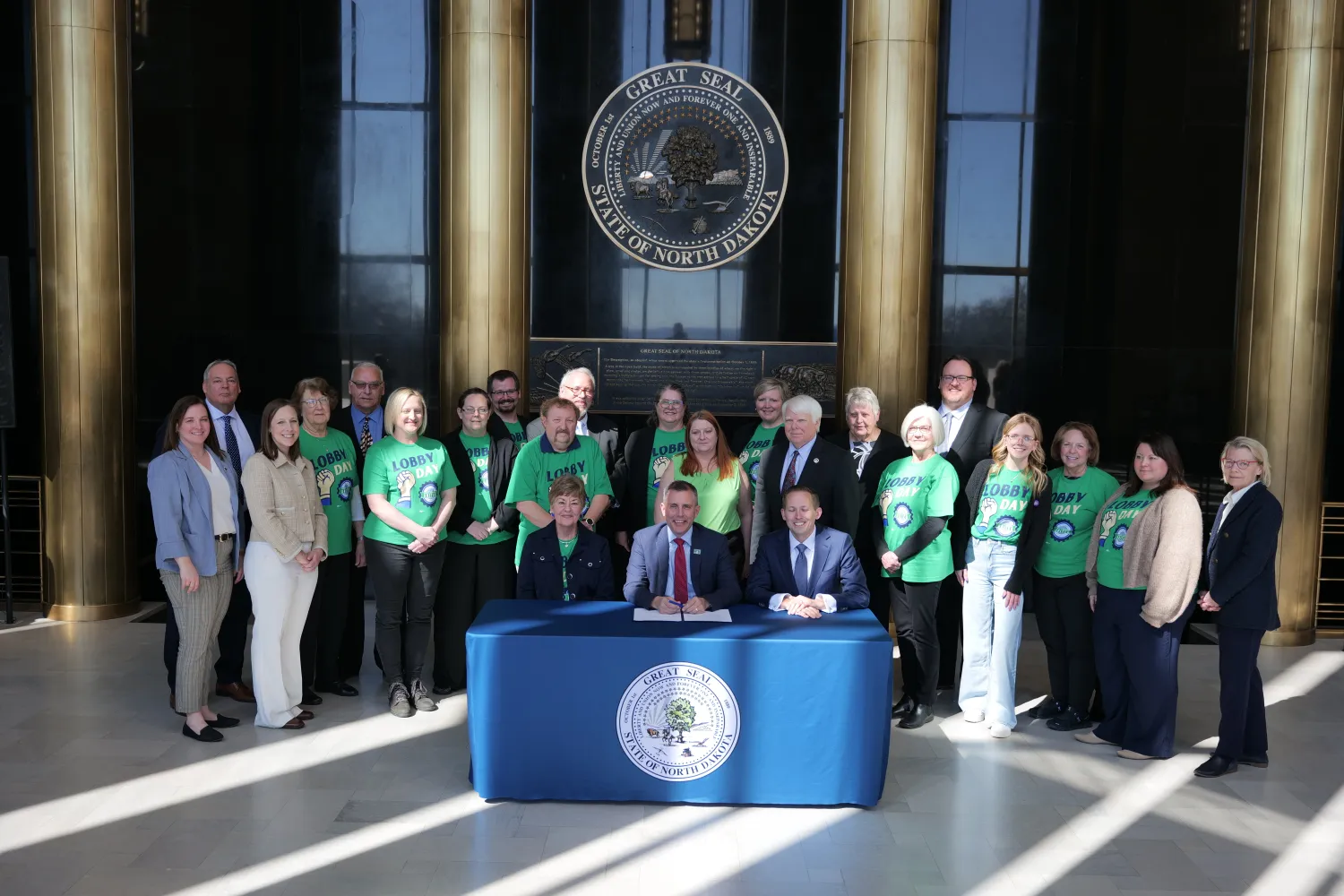
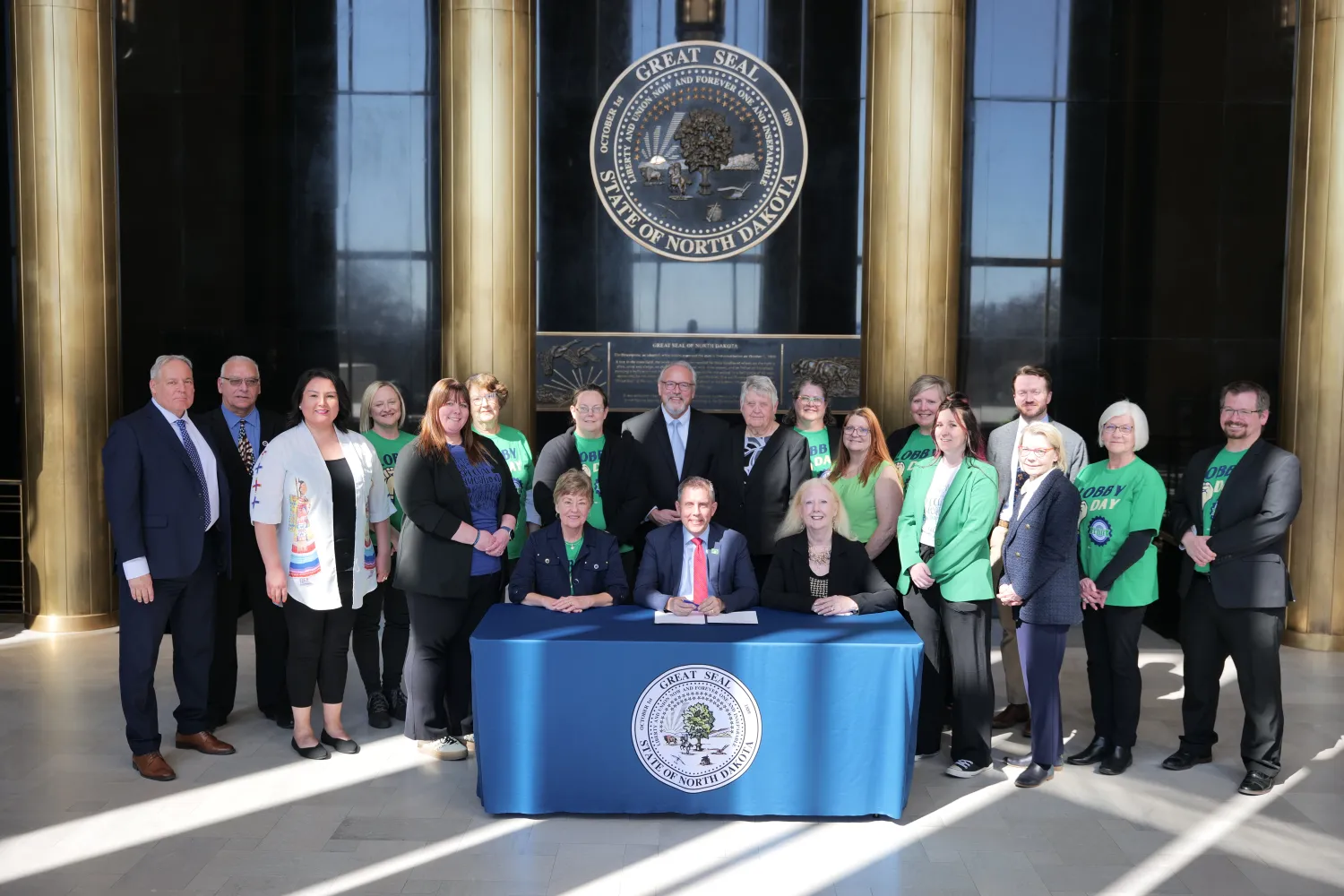
North Dakota United brought more than 50 members to the Capitol for two Lobby Day events, where members had the chance to tell legislators the real problems facing North Dakota’s classrooms.
Media Stories: 60
NDU made waves in local media as well. “North Dakota United” was mentioned, and President Nick Archuleta or one of our members was quoted in at least 60 unique stories this legislative session. That’s an average of one story every other day.
Letters to the Editor: 48
NDU members made a powerful impact this legislative session and that was reflected by attention in the media. Newspapers across North Dakota published dozens of letters from our members: 48 letters from NDU members were published at least 103 times.
Many letters appeared in multiple newspapers, ensuring our message was heard across the state. Of the 103 published instances:
- 70 opposed voucher bills
- 12 supported free universal school meals
- 9 opposed banning books
- 12 addressed other critical legislative issues