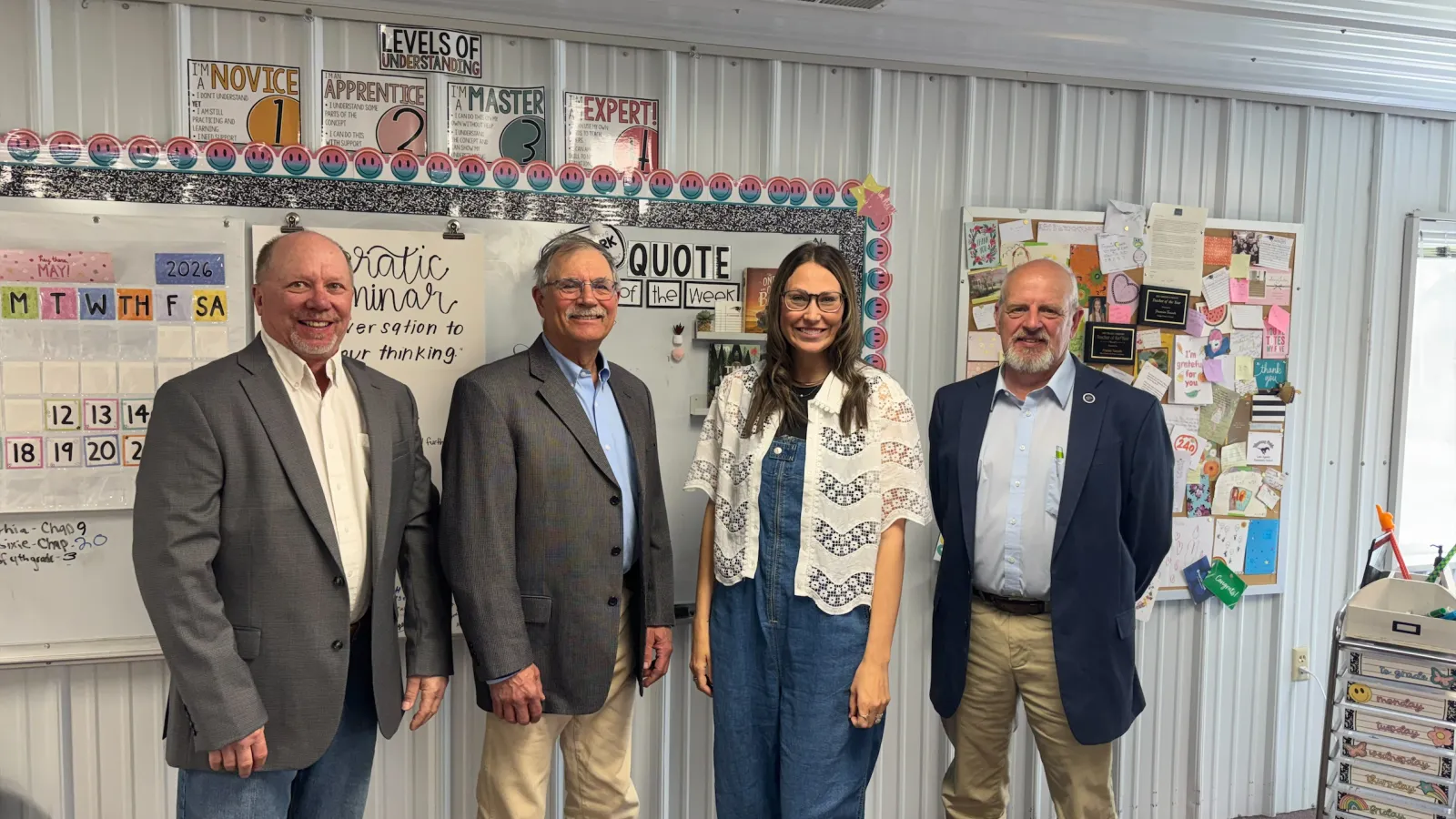

For a long time, I quietly believed my impact as a teacher began and ended within the four walls of my classroom. Like so many educators, I poured everything I had into my students each day, trusting that the work I was doing would eventually speak for itself. I stayed focused on my lessons, my students and the day-to-day moments that make up life in a classroom.
But then something shifted.
Being named the 2026 North Dakota Teacher of the Year did not just change my title. It changed my lens. It gave me a platform, yes, but more than that, it gave me perspective.
I began to understand that advocacy is not something reserved for people with formal titles or seats at decision-making tables. Advocacy belongs to educators, too. We are the ones who see it all — the breakthroughs, the struggles and the quiet wins no one else witnesses. If we do not tell those stories, they can be misunderstood, rewritten or lost altogether.
That realization settled in slowly, but it became the spark that led me to do something that felt both important and deeply uncomfortable. I invited legislators into my classroom.
I will not pretend it felt easy.
Reaching out to lawmakers in the middle of a full school year felt like trying to carve space into something already overflowing. Emails were sent and left unanswered. Schedules did not align. Time slipped past in the way it always does in education. More than once, I considered letting it go, not because I did not believe in it, but because it would have been simpler not to push.
But I kept coming back to something I shared in a recent speech at the ND United Delegate Assembly about “the table.” Too often in education, we think of the table as somewhere we have to be invited, as if our place there depends on someone else pulling out a chair for us.
But the truth is, educators are the table.
We are where those decisions land every single day. We live them, we shape them and we carry their impact into our classrooms. That is why our voices are not optional. They are essential, and they deserve to be shared.
So, I kept reaching out.
And then it happened.
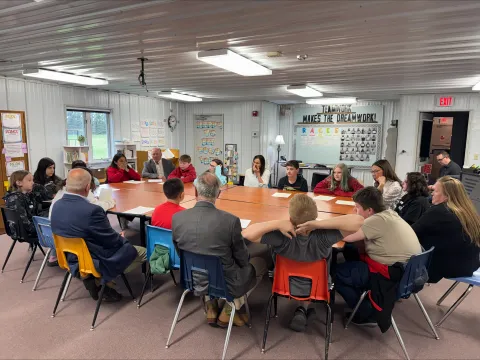
On the day of the visit, our classroom held a kind of energy that is hard to put into words. Students gathered in a circle for a Socratic Seminar, a conversation designed not for answers but for thinking. A Socratic Seminar is a space where every voice carries equal weight, where students listen not to respond but to understand, and where ideas are built together through curiosity, questioning, and respectful challenge.
It is, at its core, a shared space for thinking out loud and growing together.
The focus of our conversation was timely and meaningful. We explored a topic already surfacing in discussions around the 2027 legislative session: limiting screen time in schools.
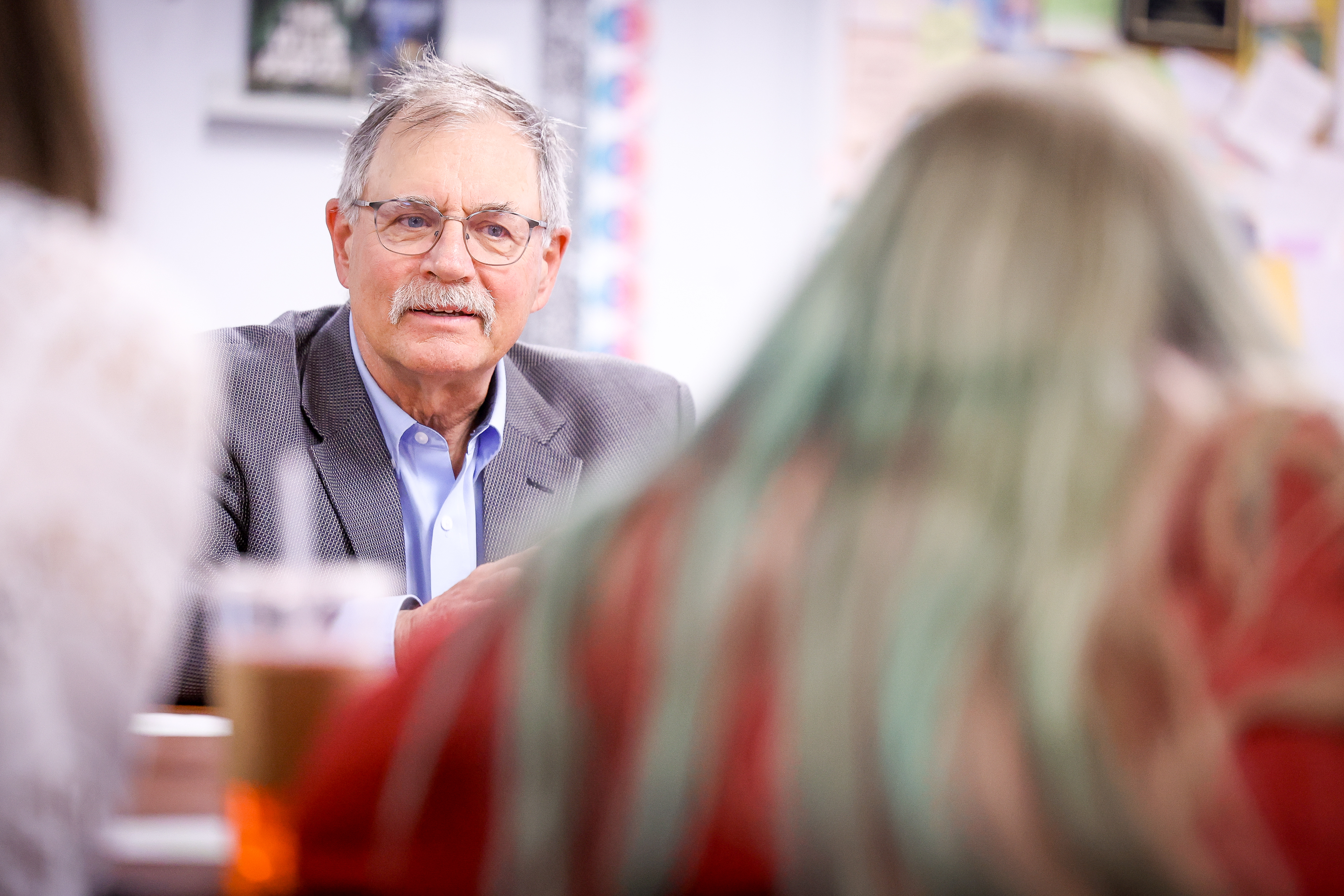
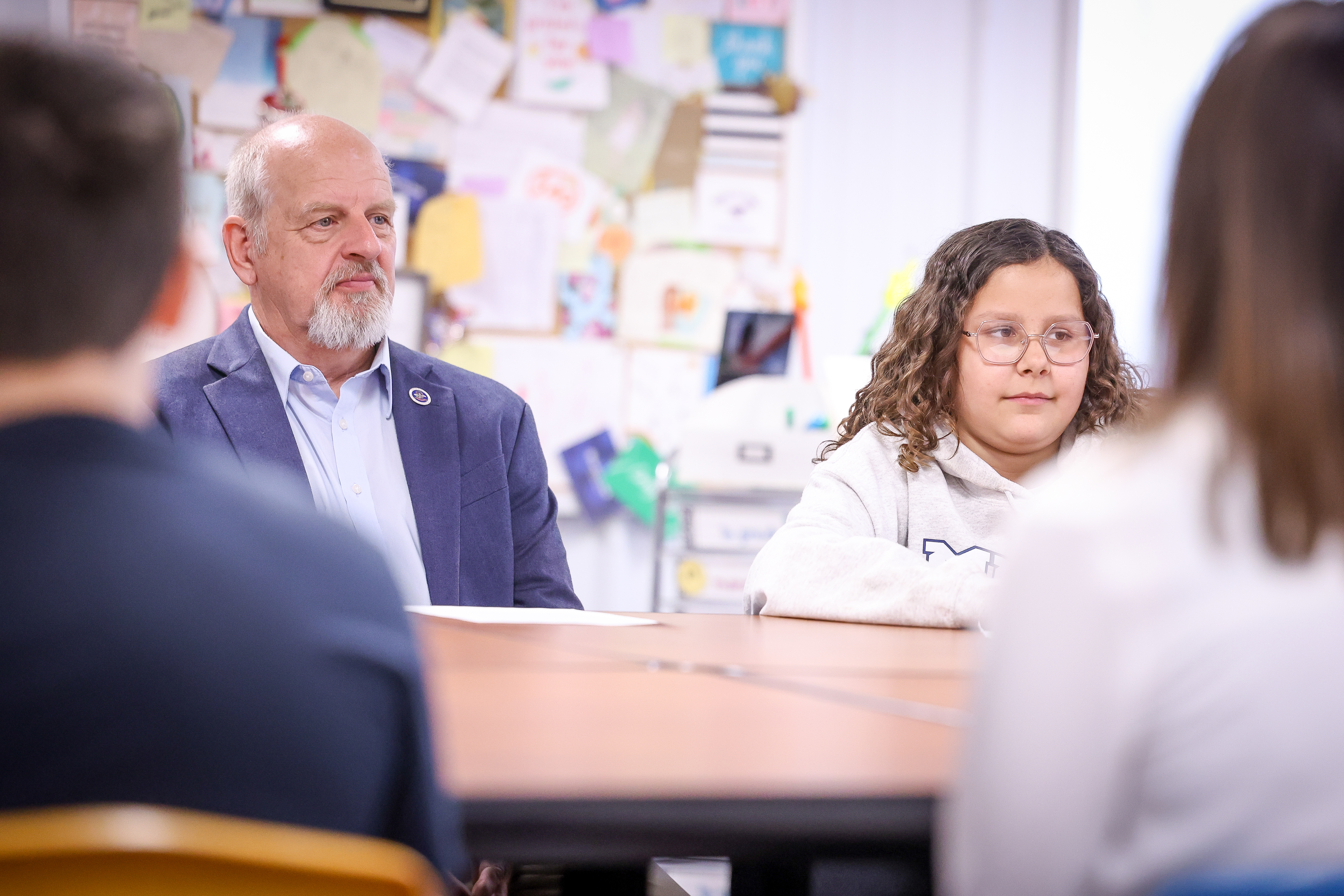
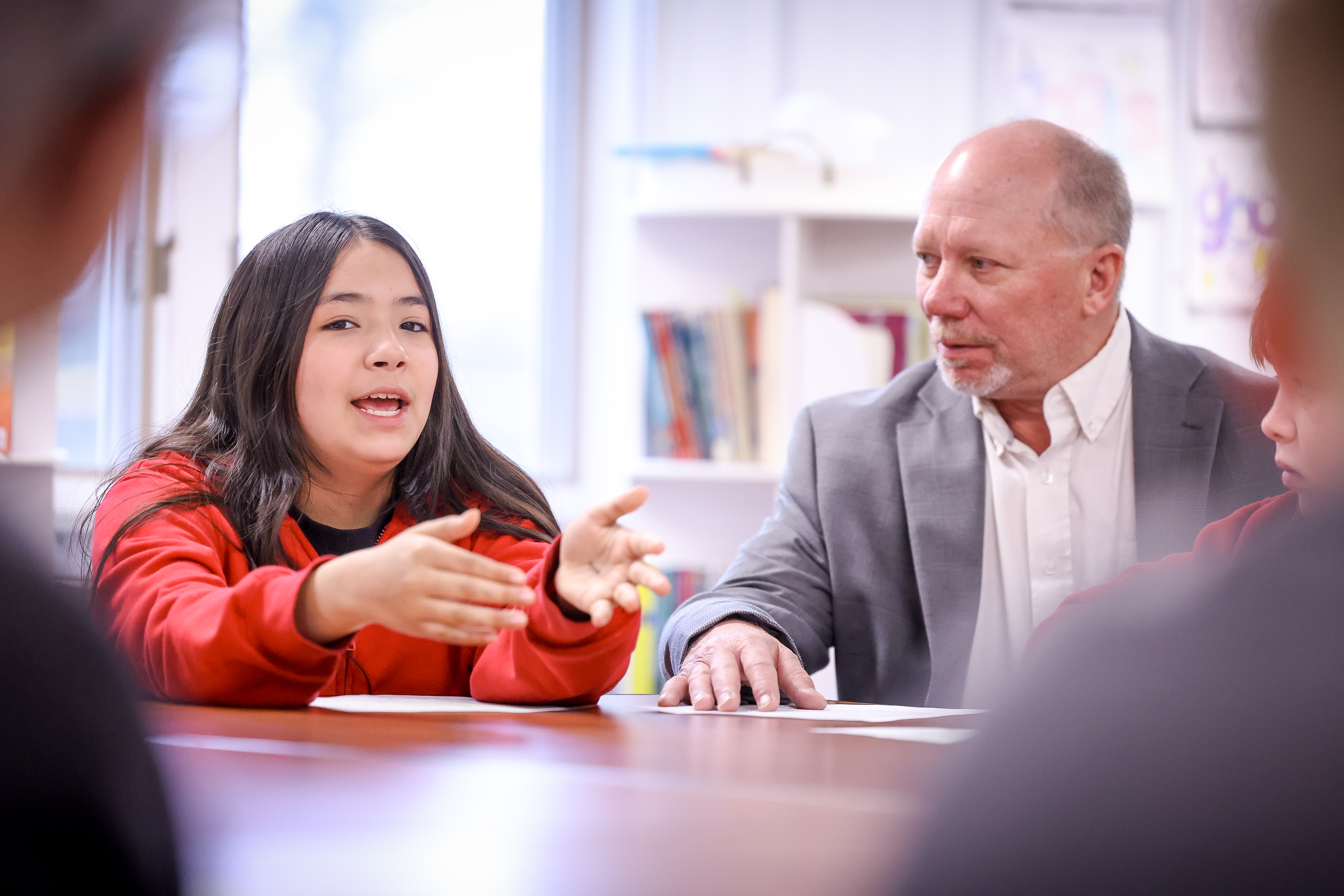
When Senator Lemm, Representative Beltz, and Representative Rustebakke entered the room, something shifted. They did not take seats of authority at the front of the room. Instead, they pulled up chairs, joined the circle, and became part of the conversation.
Quote byFrannie Tunseth, May-Port CG Public School reading and math teacher

They listened. Really listened. They asked thoughtful questions and leaned into student responses with genuine curiosity rather than agenda.
And in that circle, something powerful happened.
The room softened in the way it does when people feel truly heard. Students spoke with honesty and courage. Ideas were not performed. They were offered, shaped and expanded, together. For a moment, the usual boundaries between student and policymaker dissolved into something simpler and more human. We were just people trying to understand one another.
Later, I heard each of the legislators reflect on how impactful it was to hear directly from students. Not summaries of student voice. Not interpretations of it. The real thing.
Honest, thoughtful and grounded in lived experience. That distinction matters more than we often acknowledge. Too often, students are spoken about rather than spoken with. That day, they were undeniably heard.
More than anything, the experience reminded me that we are all on the same team: Team Kid.
What stayed with me most was not the structure of the lesson or even the topic itself. It was the quiet realization that was happening across my classroom on that day.
I watched students recognize, sometimes for the first time, that their voices carried weight beyond the walls of our room.
I watched them sit a little taller. Speak a little braver. Trust that what they had to say mattered right now — not just someday in the future.
And I wanted them to carry this with them always. Their voices matter because they matter.
Public schools are full of moments like this. Quiet, powerful, ordinary miracles that rarely make headlines but shape everything. They are filled with compassion, curiosity, resilience and brilliance that deserve to be witnessed firsthand. No report or statistic can fully capture what it feels like to sit in a circle of learners and hear them think out loud together.
I am deeply grateful to Senator Lemm, Representative Beltz and Representative Rustebakke for taking the time to step into that space with us, to listen with openness, and to engage so thoughtfully with our students. Their presence mattered more than they may ever fully know.
And to fellow educators, I would simply say this: invite people in. Advocacy does not always look like standing behind a podium. Sometimes it simply looks like opening your classroom door and saying, “Come see what is happening here.”
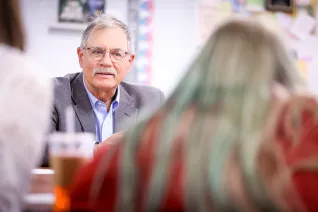
Sen. Randy Lemm listens while a student speaks during Socratic seminar at May-Port CG Middle School.
Photo by Cole Short, Hillsboro Banner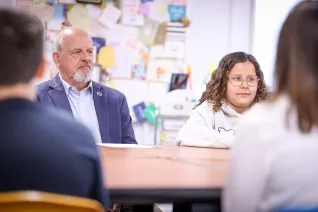
Rep. Mike Beltz listens during a Socratic seminar at May-Port CG Public School.
Photo by Cole Short, Hillsboro Banner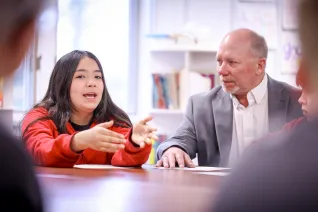
Rep. Dave Rustebakke listens as a student speaks during a classroom visit to May-Port CG Middle School.
Photo by Cole Short, Hillsboro Banner