Health insurance has become one of the fastest-growing expenses for public school districts across the United States, including here in North Dakota. While districts are expected to invest in classroom instruction, student support services, employee salaries, technology and facilities, rising health insurance costs are consuming an increasingly large share of school budgets.
North Dakota United, which represents more than 11,000 public education and public employee members across the state, became increasingly aware of rising health insurance costs through contract negotiations, local leadership meetings, and discussions with members and partners. These conversations consistently highlighted significant increases in health insurance expenses for public school employees.
To better understand the scope of the issue, NDU submitted open records requests to sixteen school districts across North Dakota: Bismarck, Devils Lake, Dickinson, Drayton, Fargo, Grafton, Grand Forks, Jamestown, Kindred, Mandan, Minot, Nedrose, Richland, Watford City, West Fargo and Williston.
The following information was requested:
- Summary of Benefits and Coverage
- The line-item amount budgeted for employee health insurance in the district’s most recently approved budget
- The percentage of total district expenditures attributable to employee health insurance
- Employee premium costs for each available health insurance plan
- Percentage change in premium costs between 2021 and 2026
- Plan changes that may have affected premiums or services between 2021 and 2026
District Spending on Employee Health Insurance
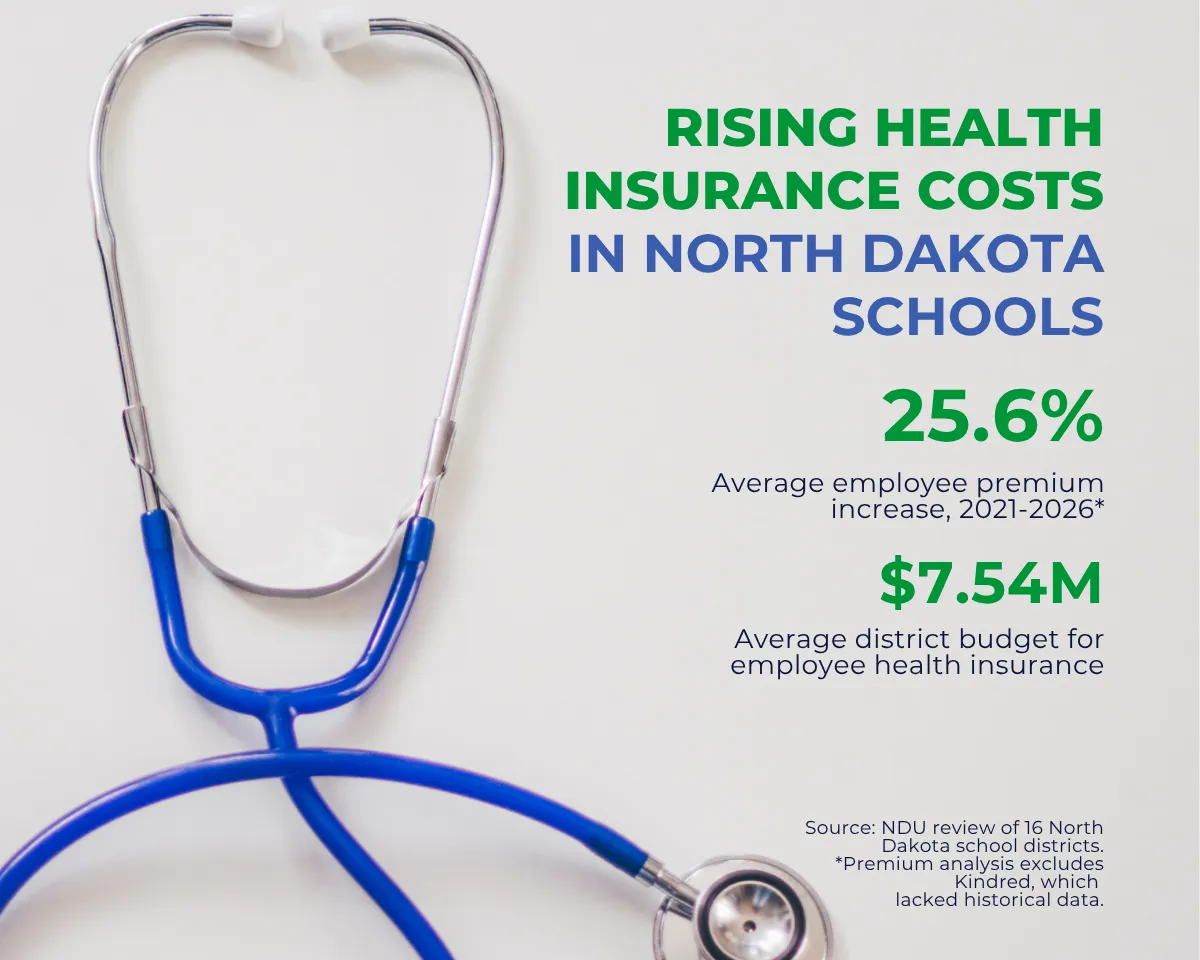
The line-item amount budgeted for employee health insurance averaged $7.54 million across the sixteen districts surveyed. As the state's two largest districts, West Fargo and Bismarck reported the highest expenditures, budgeting more than $24 million and $22 million, respectively, for employee health insurance. Fargo Public Schools exceeded its approved health insurance budget by approximately $500,000.
Only four districts budgeted less than $1 million for employee health insurance: Drayton, Grafton, Nedrose and Richland.
Employee health insurance accounted for an average of 8.55% of total district expenditure. Four districts reported spending more than 10% of their total budgets on employee health insurance:
- Dickinson: 12.6%
- Minot: 11.4%
- Bismarck: 10.9%
- Watford City: 10.64%
Employee Premium Costs
Employee premium costs varied significantly among districts because most offer multiple plan options and coverage levels.
While single-coverage plans are relatively affordable in many districts, costs increase substantially for employees covering spouses and dependents. In Grafton, for example, single coverage costs employees nothing, but a single-plus-dependent plan exceeds $6,000 annually, while family coverage costs more than $13,000 per year. The family plan also carries a $6,600 deductible, creating significant out-of-pocket expenses for employees in a district where the average salary is approximately $47,000 annually.
Family coverage costs are similarly high in other districts. Richland employees pay approximately $12,800 annually for family coverage, while costs in Watford City exceed $16,000 per year. Even in West Fargo, the state's largest school district, educators contribute roughly $6,000 annually toward family health insurance premiums.
Premium Increases Between 2021 and 2026
The most striking finding from the data was the increase in employee premium costs between 2021 and 2026. Across the districts surveyed, premium costs increased by an average of 25.6% over the five-year period.
Several districts experienced particularly dramatic increases:
- Drayton: 48.7% increase, with no reported plan changes
- Dickinson: 47.7% increase
- Devils Lake: 32.7% increase, with no reported plan changes
- Nedrose: 17.4% increase, with no reported plan changes
Kindred Public School District was unable to provide historical premium data for this analysis.
Impact on School Districts and Employees
The financial pressure created by rising health insurance costs affects both school employees and students. As districts allocate more resources to insurance expenses, fewer funds may be available for hiring teachers, updating curriculum, improving facilities, expanding student programs, or investing in instructional materials and technology.
Employees also experience the impact of rising health insurance costs directly. Higher premiums, deductibles, and out-of-pocket expenses reduce the value of salary increases and can make careers in public education less financially attractive. This challenge is especially significant during ongoing teacher and staff shortages, as competitive benefits remain a crucial tool for recruiting and retaining qualified employees.
When health insurance costs continue to rise while benefits decline or employee contributions increase, districts may face additional challenges in attracting and keeping experienced educators and support staff.
Conclusion
School district health insurance costs are more than a budgetary concern — they are an educational issue. Rising premiums and medical claims increasingly force districts to make difficult tradeoffs that affect staffing levels, classroom resources, and student services.
Addressing these challenges will require long-term solutions, including consideration of state-level support and broader strategies to control health care costs. Without sustainable approaches, health insurance expenses will continue to compete with the core mission of public education: providing students with the resources and opportunities they need to succeed.